
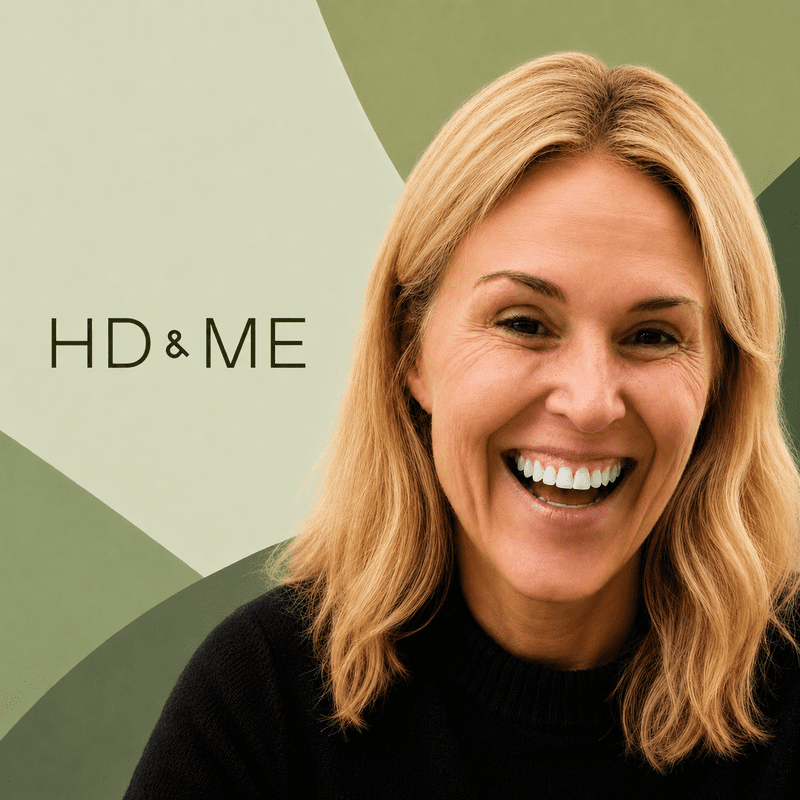
We're Claire and Rachel. Welcome to HD&Me.

We went from practicing law to practicing Human Design. HD&Me was started to make Human Design feel clear, practical, and helpful.

Claire, co-founder of HD&Me
Co-Founder

Claire

Claire brings depth, wisdom, and years of Human Design study to HD&Me. As an attorney, she was trained to question, analyze, and look for evidence, which is exactly why she approaches this framework with both curiosity and healthy skepticism.

Her work is thoughtful and deeply informed, especially for people who want to explore Human Design beyond the basics.

  • 1/3 Sacral Manifesting Generator
  • Specializes in advanced chart interpretation, parenting, and the 2027 shift
  • Dedicated to making Human Design practical, empowering, and easy to understand
Co-Founder

Rachel

Rachel brings a thoughtful, relatable lens to Human Design. Her background in law, psychology, kabbalah, and yoga gives her a unique ability to translate complex systems into insights anyone can use in daily life.

Her approach is rooted in curiosity and experimentation: keep what works, question what doesn't, and use the information in a way that feels right to you.

  • 5/1 Emotional Manifestor
  • Specializes in Human Design education, readings, and coaching
  • Passionate about helping people understand themselves with clarity and compassion
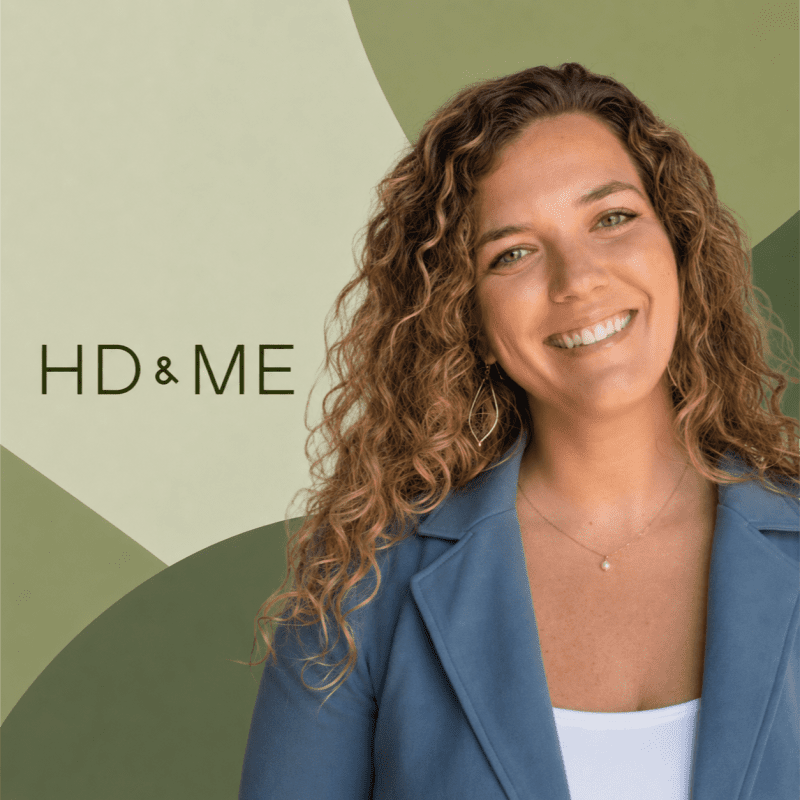
Rachel Dunham, co-founder of HD&Me

Let’s dive into your design together.

Explore Our Offerings →

FREQUENTLY ASKED QUESTIONS

Our Story, Our Approach, and the Human Design Experiment

How did HD&Me get started?

HD&Me started in a law office.

Rachel was practicing law at Claire's firm when Claire began to mentor Rachel using her Human Design. What began as conversations about strategies for approaching work and decision-making eventually became years of mentorship, experimentation, and a shared mission to make this information more practical and accessible.

Today, HD&Me exists to help people explore Human Design in an approachable and useful way.

How do you respond to skepticism about Human Design?

We encourage it and think skepticism is healthy.

Our philosophy is simple: Human Design isn't something you have to believe because someone told you to. It's something you can experiment with in your own life and decide for yourself whether it's helpful.

Our role isn't to convince people. It's to present the information clearly and give people practical ways to test it.

How can a system based on time of birth actually be helpful?

The biggest question most people have is, “How can my time of birth possibly tell me anything meaningful about who I am?”

That's a fair question, and one Rachel asked herself when Claire first requested her birth information years ago.

What changed Rachel’s perspective was not being asked to blindly believe in the system. It was seeing how the information could be applied in real life (especially around work, relationships, and decision-making). For us, the value of Human Design is not in proving something intellectually before you begin. It is in experimenting with the information and noticing whether it helps you understand yourself more clearly.

Why do two former attorneys teach Human Design?

Our legal backgrounds influence everything we do.

Practicing law taught us to ask questions, challenge assumptions, analyze information critically, and look for what actually holds up in practice. We bring that same mindset to Human Design.

We believe people should stay curious, think for themselves, and use this information as a tool for greater self-understanding, not as something to accept without question.

Why do you call Human Design an experiment rather than a belief system?

Because no one should have to take our word for it.

Human Design is most valuable when it's treated as a practice rather than a philosophy. We encourage people to test the information, pay attention to what changes, and keep only what feels true and useful to them.

Healthy skepticism and personal experience can coexist, and we think that's a good thing.

What do you mean by “the Human Design experiment”?

Human Design is often called an experiment because it isn't meant to be passively consumed or believed in. It's meant to be practiced.

At HD&Me, we encourage people to start with two foundational concepts:

  • Strategy: your way of approaching and attracting aligned opportunities, relationships, and experiences.
  • Decision-Making Authority: your unique way of making decisions that goes beyond “thinking it through.”

Like any experiment, you introduce a new data point, observe what happens, and keep what works for you.